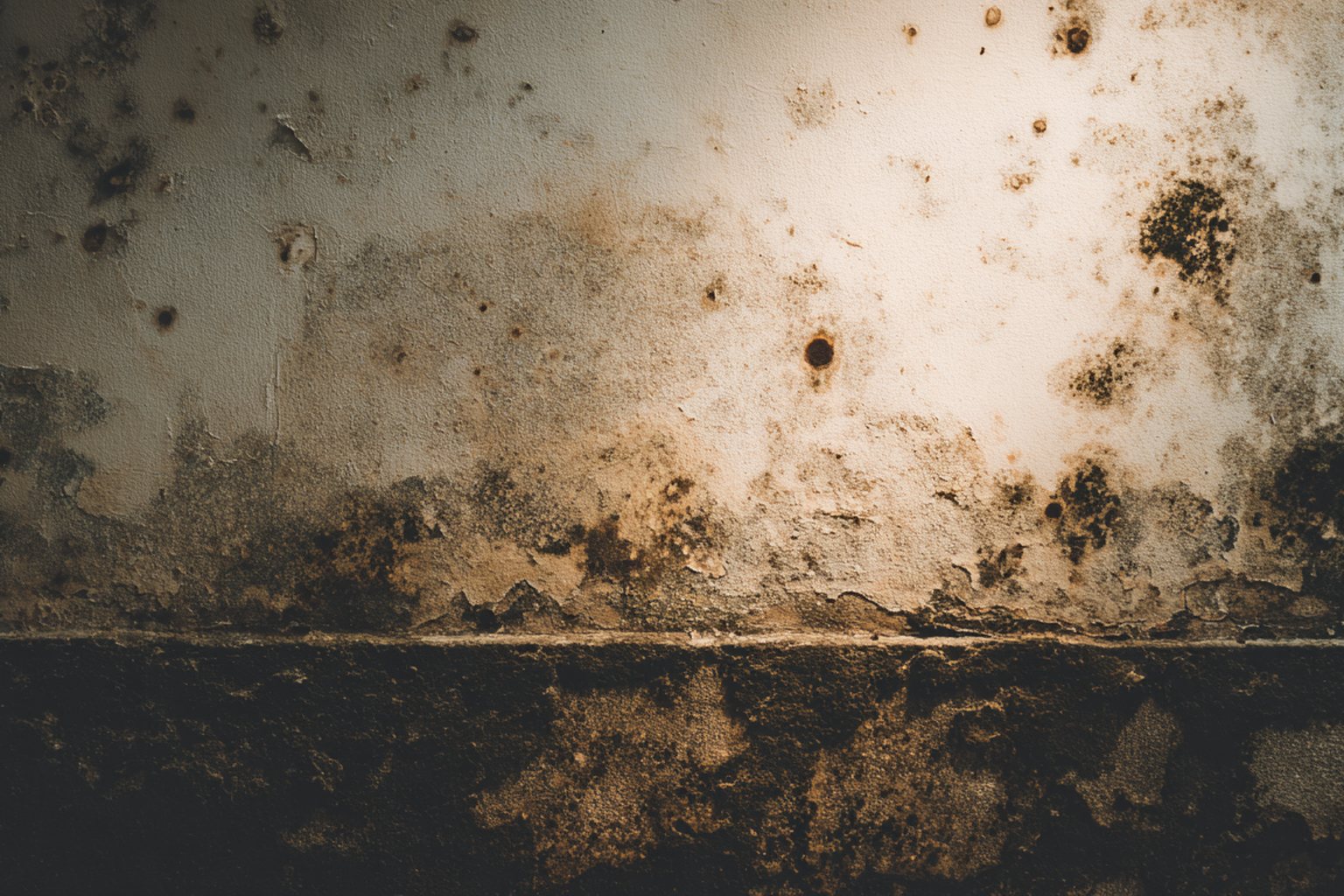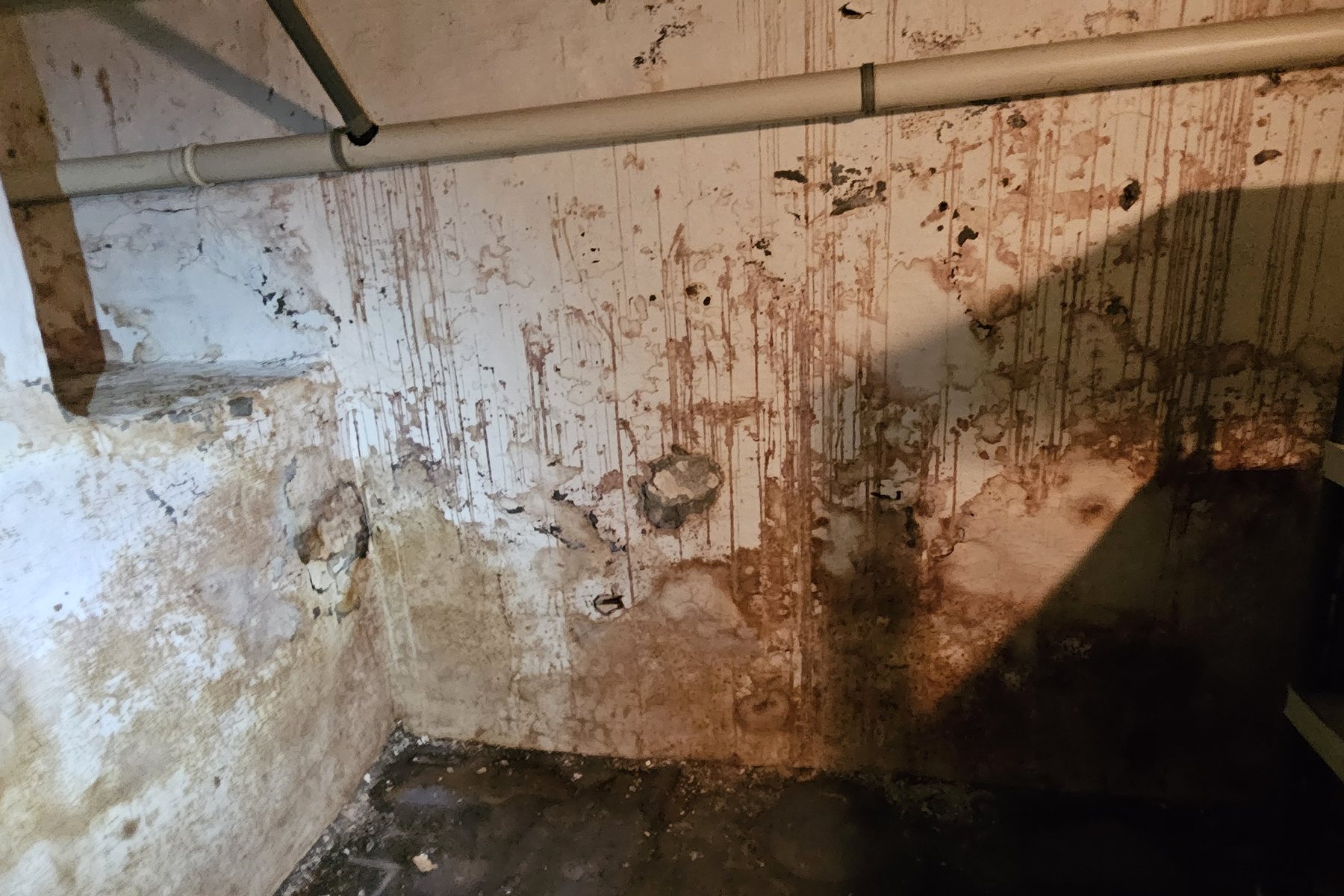
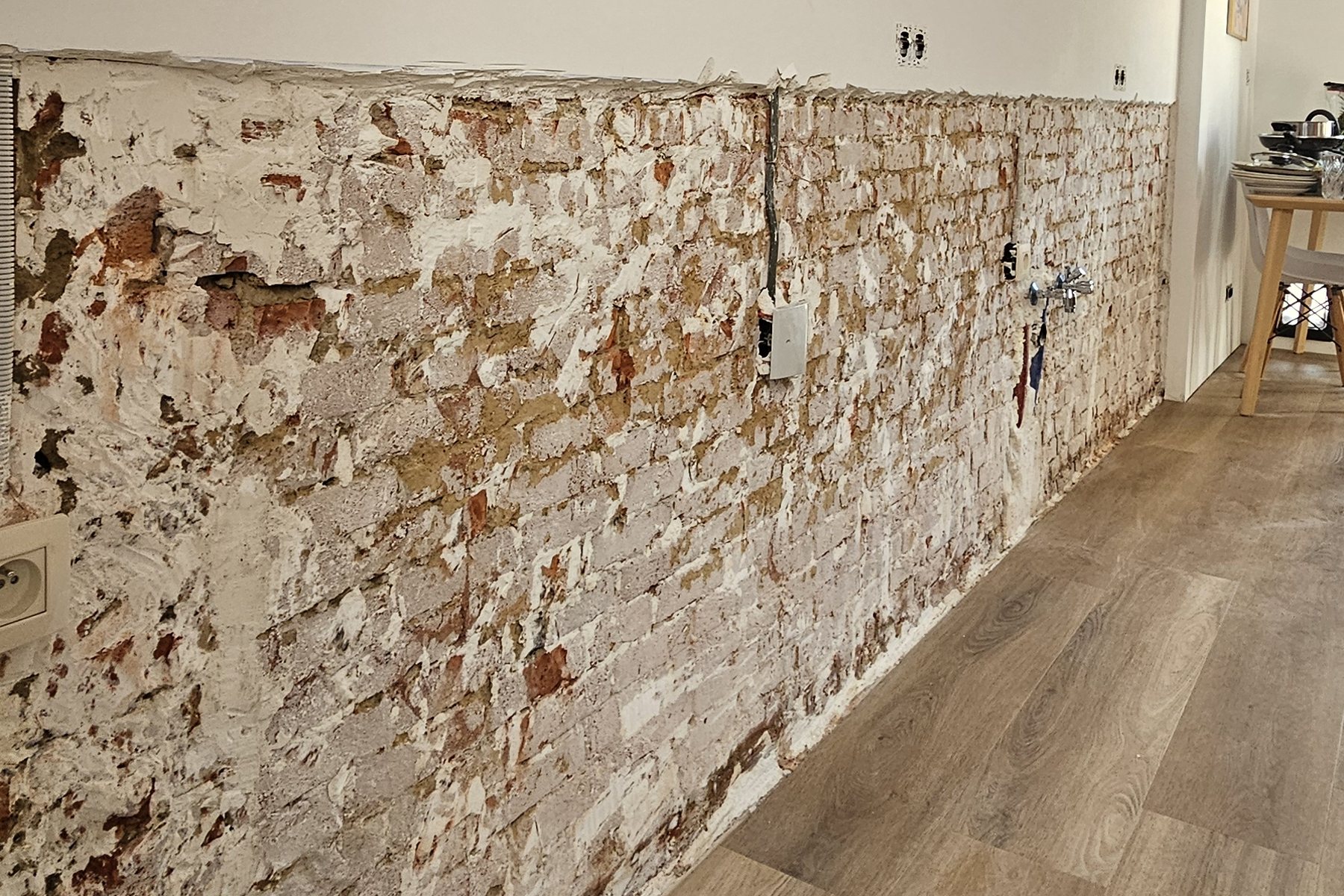
White or powdery patches on a wall raise questions. Is it an old deposit, is the patch still changing, and which parts of the finish are affected? Start by recording what is visible.
Why salts deserve attention
Buildwise explains that hygroscopic salts can absorb moisture from the air and damage interior finishes. Plaster damage can therefore persist even when there is no longer an active moisture source. Read the explanation of salts and interior plaster.
A white patch does not automatically determine which treatment is needed. During the assessment, ask which findings help distinguish between possible explanations.
Keep information about the past
Previous treatment or renovation can provide important context. Gather what you know about the wall, its finish and when the problem was noticed. Take new photos from the same position as older ones.
- Where are the deposits and how large is the affected area?
- Have the paint, plaster or mortar joints changed too?
- Have moisture measurements or treatments been carried out before?
- Which products or finishing layers were applied afterwards?
Discuss the cause and repairs as separate questions
Ask how the possible moisture source will be assessed and what this means for the damaged finish. Have the proposed preparation and subsequent monitoring explained.
On the page about rising damp you can find more context about one possible damp problem. An on-site assessment is still needed to interpret the observations in your home.