Treating rising damp — Fast, lasting and affordable
Do you have damp patches at the base of your walls? Is the paint flaking or are white salts appearing on the plaster? You may be dealing with rising damp — a problem best addressed promptly to prevent damage to your home and health.
Clean, dust-free work: we use air extraction to keep the work as dust-free as possible, and Xvocht cleans up and mops after the work, leaving your home neat and cared for. Our rising damp treatment comes with a 30-year guarantee.
What is rising damp?
Rising damp occurs when groundwater moves up through the foundations into your walls. This is especially common in older homes without an effective damp-proof course. Through the capillary action of bricks, the wall draws up moisture like a sponge.
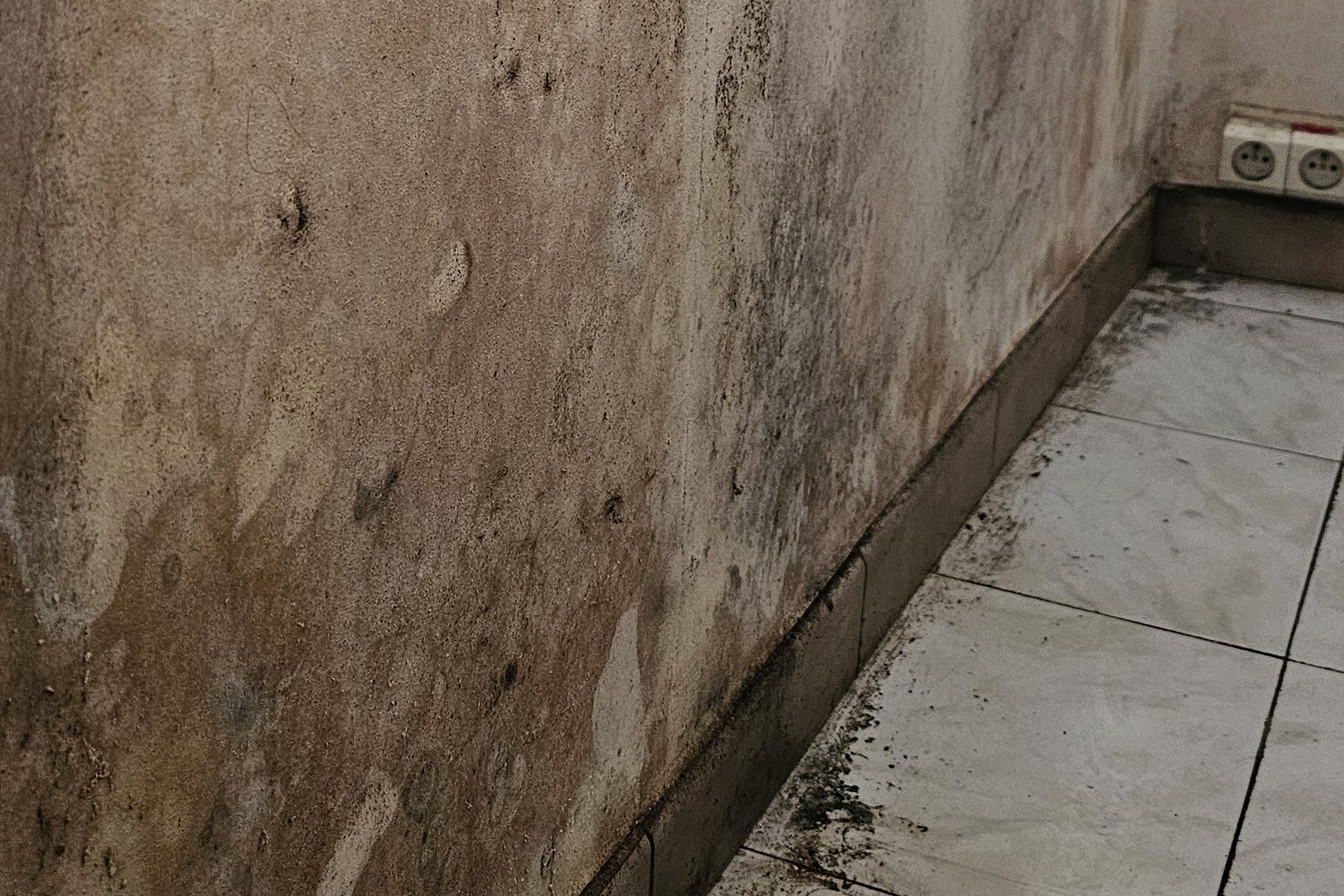
Recognise the signs of rising damp
Typical signs include:
01
Damp patches or discolouration at the base of walls
02
Mould growth or a musty smell
03
Peeling paint or loose wallpaper
04
Salt deposits (white powder on the wall)
05
Crumbling plaster
If you notice one or more of these signs, it is sensible to arrange a free damp assessment.
Rising damp can cause more damage than you might expect:
01
Health problems such as allergies and breathing difficulties
02
Damage to walls, plaster and flooring
03
Poorer insulation and higher energy bills
04
Loss of property value
Treating rising damp
The most common and effective technique is injecting a damp-proofing gel or liquid into the wall.
This creates a new horizontal damp-proof course:
Wall injection
Lasting results
Quick installation (usually 1 to 3 days)
Dust-free, clean work: we clean up and mop after the work
A 30-year guarantee on the damp-proof course
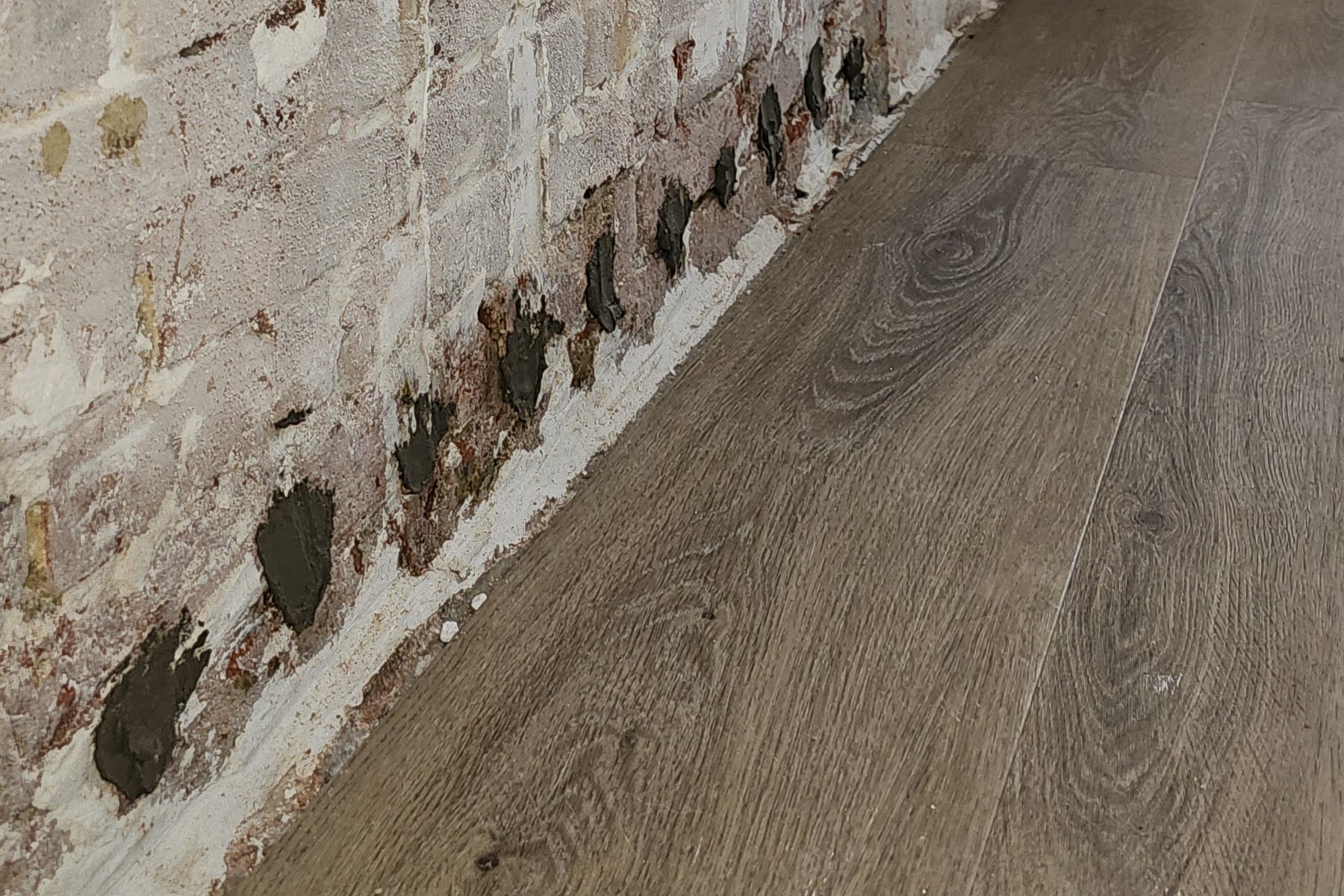
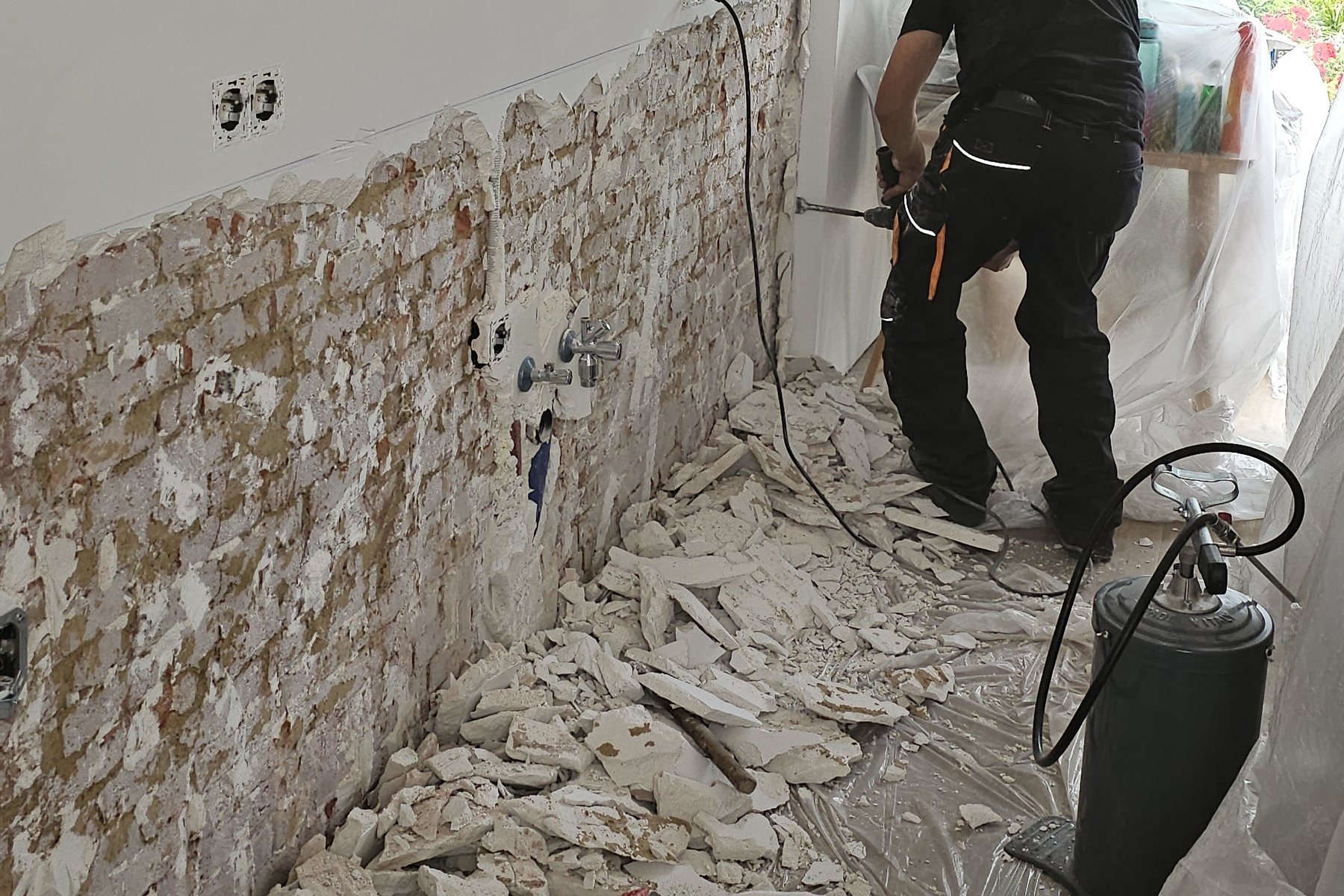
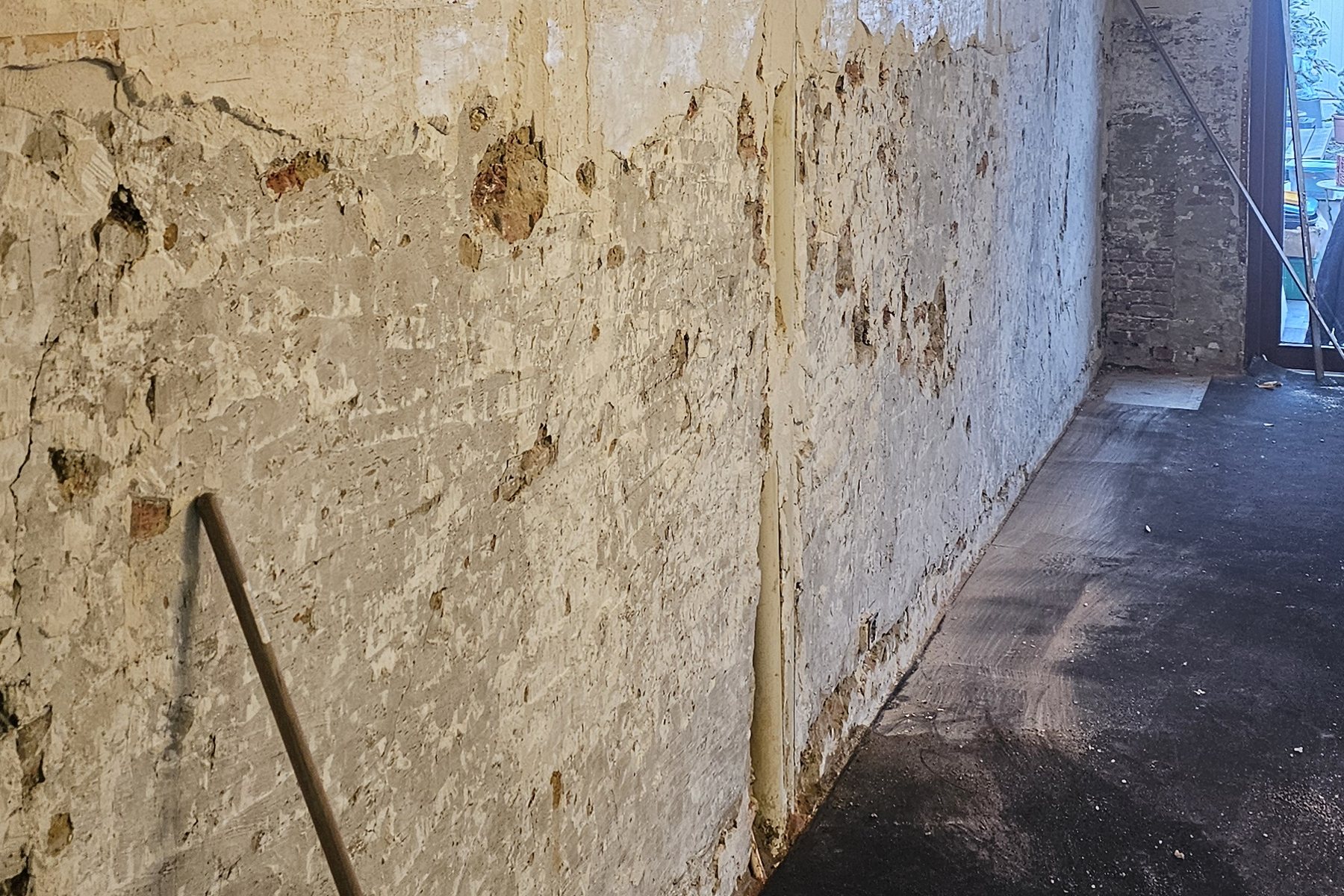
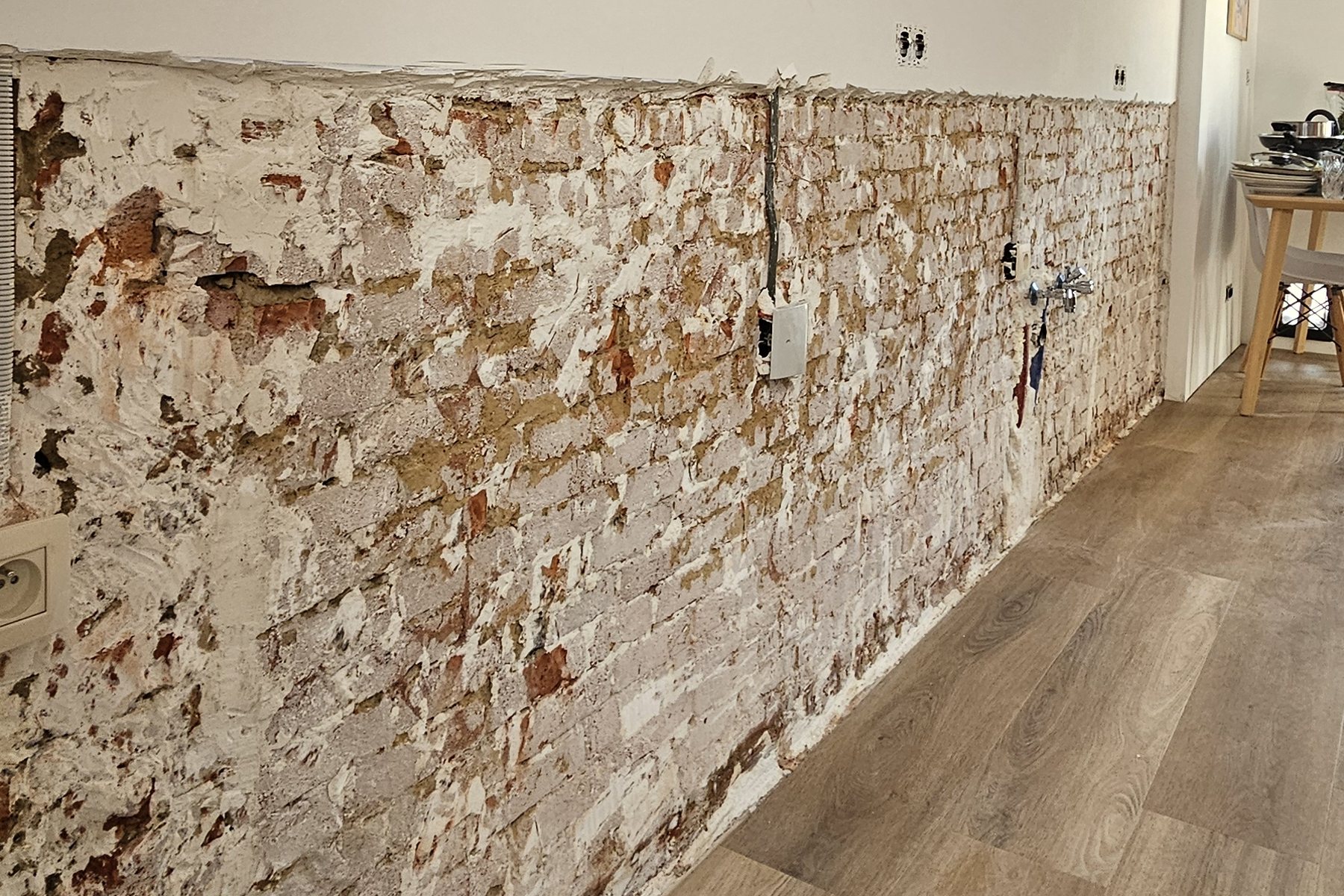
If the plaster is damaged, it is removed first. The wall is then treated for salts and replastered with a damp-resistant mortar.
Removing plaster & replastering
01 / 02
How much does rising damp treatment cost?
The price depends on the extent of the problem and the treatment chosen. As a guide:
From 25 linear metres or 25 m², we offer a lower rate.
Wall injection
€85 – €150
per linear metre
Wall injection:€85 – €150 per linear metre, depending on wall thickness and access.
Removing plaster and treating the wall
€120 – €150
per m²
Removing plaster and treating the wall (if needed): between €120 and €150 per m², including salt treatment and damp-resistant plaster
01 / 02
These prices are based on industry averages.
Other companies may charge similar rates, but it is important to consider the quality of the injection material, workmanship and warranty. High-quality products can achieve better results with fewer drill holes, improving both efficiency and the final result.
30-year guarantee: our rising damp injection and treatment work is covered by a 30-year guarantee.
We work dust-free, clean up and mop after the work, so you can enjoy a tidy home as well as dry walls.